Professional soldiers through the past century and a half have seldom thought much of the journalists who have accompanied them to war. William Howard Russell of The Times, father of modern war corresponding, was sometimes feared by the generals of the Crimea, but never admired by them. In the early days of the American Civil War, an idealistic Union general named Irvin McDowell said that he had arranged for correspondents to take the field with the army, “and I have suggested to them that they should wear white uniforms to indicate their purity of their characters.” It was not long before any delusions of that sort were shattered. By 1898, when General Kitchener started his expeditionary force up the Nile to defeat the Mahdi, he was best remembered among the accompanying journalists for his answer when they besieged his tent one morning in search of news: “Out of my way, you drunken swabs!”
In the nineteenth century, an image was forged among professional soldiers about the behaviour of journalists reporting war which has persisted in some measure to this day: of a band of anarchistic, untrustworthy, ill-conducted men, owing loyalty to nothing save their own careers. In our house in London, I have some drawings from The Graphic and the Illustrated London News from colonial wars of the 1880s and 1890s, depicting correspondents advancing to war armed with cases of whisky, riding while better men walked, looting while better men fought.
The relationship between this image and reality in the nineteenth century was very much the same as it is today. Journalists, like warriors and pretty much everybody else, are a mixture of the good, the bag and the ugly. Soldiers fight wars because it is their duty to do so. Although they are too gentlemanly to say so too loudly or too often, most hunger for the opportunity to distinguish themselves in action, because war for the professional soldier offers the same career opportunities as a takeover or a major sales campaign to a corporate executive. Civilians, in modern times, take pains to avoid battlefields whenever they can. The old voyeuristic instincts that brought fine ladies and gentlemen in their carriages to the ridge of Waterloo, and to the great battlefields of the American Civil War, have gone. Modern weapons make the scenes of conflict between armies too uncertain and too dangerous to encourage casual bystanders.
The public remains inexhaustibly curious to discover what war is like, but now satisfies this at one remove, through the media. It has been accepted by western societies since the 19th century, though rather less enthusiastically by their military commanders, that journalists should be allowed to tell their peoples what is being done by their armies in their name. In every modern war, therefore, anything between a handful and some thousands of media correspondents have been authorised to attend the world’s battlefields as privileged spectators. Some – like Russell and G W Steevens in the first generation, Alan Moorehead, Martha Gellborn and Ernie Pyle in the Second World War, John Simpson and Christina Lamb today – have been people of high intelligence and literary gifts, who treated their responsibilities very seriously, and filed dispatches that become recognised as models of informative reporting. This by no means always make them popular with armies. Russell was hounded out of the United States for telling the world after the battle of Bull Run in 1862 that the Union forces had broken in rout, when the Washington administration and the Union command recoiled from admitting the truth. Winston Churchill was enraged by the reporters in North Africa who told the public, entirely accurately, that British tanks were no good.
And in addition to the serious and dedicated reporters, from the beginning there have also been the voyeurs, sensation seekers, political propagandists, drunkards, louts, cowards carrying press cards. These men- and today women- often outnumber the serious reporters: maybe not in their influence upon the public, but in the perception of professional soldiers on the spot, and in later legend. Vietnam, more than any other recent war, attracted a host of thrill seekers, war lovers, women war “groupies”, reporters who never left the bars of Saigon.
The great American military analyst S L A Marshall wrote bitterly of the lack of national loyalty among that new breed of reporters in Vietnam: “In the days of yore the American correspondent … was an American first, a correspondent second. This old-fashioned standard seems to have been forgotten in south-east Asia. Some old-timers still play the game according to the rules. There is a new breed that acts as if it believes a press ticket is a licence to run the world”. I shall say a bit more later about issues posed by the hubris of some modern war correspondents. Yet we should no more allow the doings of the moderate reporters to define our picture of the media at war than we should judge armies by their stupid officers. The principal downside of the dross on the battlefield is that whereas there is almost no limit to the number of journalists who can report a royal wedding, flood disaster or a big political event, physical constraints in a war mean that only a limited number of reporters can be accredited to a battlefield. Every dud who gets to accompany an army means that one less good reporter will do so.
Over the past century, soldiers of all nations have learned a lot about living with the media. The education process began in earnest in the First World War. In August 1914, British military commanders felt that they had seen enough of newspapermen to be sure that the huge struggle then getting going would fare better without the presence of people whom they termed with wholehearted irony “the gentlemen of the press”. For many months after Mons and the Marne, information reaching the British public from France and Flanders was both thin and often wildly inaccurate, based solely on official bulletins from British headquarters. No journalists were allowed to visit the front, nor given access to even routine military information. Yet as the war dragged on, losses mounted horrifically and victory seemed ever more remote, the directors of the British war effort were compelled by their political masters to review policy. They began to understand that the public’s ignorance of what was happening in France, of what millions of British soldiers in uniform were doing, was seriously injuring public morale. Here was the country engaged in the greatest military effort in its history. Yet its people were being told nothing about the experiences which their sons and husbands were enduring in the trenches. The decision was made that it was essential to accredit some correspondents to GHQ. The quality of British reporting remained poor to the end of World War I. The access granted to correspondents was pathetically limited. But the central point was conceded, which has been recognised ever since: to sustain the will of a democracy for a war, it is essential to tell its people what is being done in its name.
In 1939, the lessons had to be learned all over again. It was not until at least 1941 that the British media and the government settled down to a reasonably satisfactory relationship, which endured until the end of the Second World War. Not only was there a vital learning process for the heads of the institutions concerned, editors and ministers alike. It was also necessary for a generation of journalists to learn in the field about the realities of war, about how armies, navies and air forces did their business. Over months and years, they did so, but it took a long time for the likes of Alan Moorehead and Alexander Clifford to develop the brilliant expertise which they displayed in the later years of the struggle.
In the 1960s and 1970s, the Vietnam experience caused many American generals to believe that they could have done their business better if the prying eyes of the media had been kept at a distance. Some of those commanders honestly believe to this day that the media lost Vietnam for them, which is a travesty of the truth. And in any event, they could never fulfil their aspiration to keep reporters at home, any more than they can do so in Iraq today. In part, this is because they have been forced to accept that their own men, the soldiers doing the fighting and putting their lives on the line, need to feel that their families and people back home know what they are doing.
To be sure, soldiers, sailors and airmen in action get cross about media exaggerations or misreporting, partly because these frighten their families at home. But they want their kith and kin to know all that can be told about what is happening to them. I’ll give you an example from the 1982 Falklands War. In the early days after the landed at San Carlos, we quickly realised that the critical battle was being fought offshore, between the Argentine air force and the Royal Navy. Yet there was no reporter aboard any of the front line frigates. I flew out to the command ship, and harassed the naval staff to be allowed to visit one of the ships bearing the brunt of the battle. They were dismissive. They said the sailors had no time for the likes of me, when they were running the fight of their lives. Eventually I appealed to the captain, a sensible chap, who saw the point. Between Argentine sorties, he had me flown to the frigate Arrow. When I got there, I was deluged in rude remarks from the sailors, who demanded to know where all the reporters had been. They said they were weary of turning on the BBC World Service, and hearing so much said about the landing force, and nothing from the navy’s frigates at the centre of the storm. When they were being bombed and shot at, it really stung them to feel that nobody at home was noticing.
They wanted to get their names in the paper, as most warriors do. Censorship, when it is imposed, is often unimaginative. In the Falklands, the Mod ‘minders’ routinely deleted all identification of units from reporters’ copy. But after the Parachute Regiment’s triumph at Goose Green, for morale reasons it was decided to let it be known that 2 Para had won the British victory. Once 2 Para had been cited, it kept being named all through the war. This caused huge resentment among all the other units doing the fighting, which stayed anonymous. On the night of June 11th, 1982, three Royal Marine Commandos carried out gallant and successful attacks upon Argentine hill positions overlooking Port Stanley. I filed a long report on the experience of 42 Commando, with whom I climbed Mount Harriet, and which appeared in most British newspapers. But the MoD censors deleted all references to the unit’s identity, and even to the fact that its men wore green berets. The Marines were furious that 2 Para was given a free run in the headlines, while they were kept out of them. This may sound childish, but it reflects the way soldiers feel. Today, in Iraq and Afghanistan, it is a source of tremendous pride that say, the 3 Para or Royal Anglian battlegroups get credit for their actions. The generals know this matters, in sustaining the will of the nation at home as well as that of the soldiers on the battlefield. Sure, some publicity can be damaging- viz Abu Gharaib and stories of mistreatment of civilians. But most reporting plays a vital role in sustaining morale.
Closely related to this point is, of course, that of censorship. My own interest in all things military was first sparked by reading my father’s old reports as World War II correspondent of a well-known weekly of the period, Picture Post. A collection of his dispatches was published in Britain in 1942 under the ironic title “Passed As Censored”. When I was 20 years old, just starting to understand some of the realities, as distinct from the boyish illusions of war, I read again my father’s account of accompanying a Bomber Command raid upon the German battlecruisers Scharnhorst and Gneisenau at Brest. I challenged him: “Why have you written about something like this as if it was an adventure which the crews enjoyed ? This isn’t how most men really feel about flying bomber operations”. Father answered by saying simply: “We were at war. What I was doing was part of the war effort. You start telling people the truth about what happened when the blackout curtains come down, and it’s all over”. Winston Churchill, as Britain’s Prime Minister in 1944, told the House of Commons that he was causing censorship to be tightened, after the publication of some dispatches from the Italian front which declared that “desperate” fighting was taking place. Churchill said: “Such words as ‘desperate’ ought not to be used about a position in a battle when they are false. Still less should they have been used if they were true”.
Now these remarks applied to a war of national survival in a way they cannot to modern so-called ‘wars of choice’. When I was reporting abroad for British newspapers and the BBC in Indochina, the Middle East, Angola, India and so on, my job was simply to tell as much as I could discover to readers about what was going on, to evade military censorship in these countries if I could. If, in Israel, that meant flying to Cyprus from Tel Aviv with film in my shoes, so be it.
Yet I must admit that I felt differently in the Falklands. Living amid the task force at the other end of the world, I felt much more conscious of being British than of being a reporter. I wanted our side to win. I had no misgivings about telling their story as sympathetically as I could because, during those months in the South Atlantic, I found myself falling in love with many of the men whose deeds I was reporting.
I only once knowingly distorted the truth in my dispatches. In the days after the landing at San Carlos, I wrote stories which represented our morale as a good deal higher, our confidence rather greater, than in truth it was. For at least ten days, we were watching our ships take a battering at the hands of the Argentine air force. Operating in this desolate wilderness so very far from home, for a time we felt very fearful of defeat. When the media postmortems took place after that war, I admitted my excess of optimism and was publicly rebuked for it by some colleagues.
But that war was in a host of ways very old-fashioned. The circumstances attending it will never be repeated, in the age of satellite phones. The censors had absolute control of our communications, and would never have let any of us to file a dispatch declaring that the Task Force was deeply disheartened, and that one more good push by the Argentine air force might prove decisive. Even had I been able to, would I have wanted to ? Some of my British colleagues, and a lot of my American ones, would say that I should have done. They declare a loyalty to our trade which is independent of and superior to any which they owe to their country. Me, I believe that none of us in our trade can expect to convince the public that the ethics of journalism have a special priority. In war as in peace, we can surely defend our actions by only one set of criteria: the public interest. Obviously, there will always be ferocious arguments about how such interest should be defined in given circumstances. But this must surely be the fixed point in any argument about what represents acceptable media behaviour, above all when lives are at stake. I suspect that most people here today would agree that no responsible reporter should file reports which might risk lives by giving details of upcoming operations. Yet some modern journalists would passionately disagree. They would say that it is our rightful job to tell the world whatever we can find out. That view does as much as anything to make professional soldiers chronically wary of us.
In the Falks one big advantage- the war was being well run, and we won amazingly quickly. In Iraq and Afghanistan today, very different issues. Inconclusive at best, doubtful cause. In my own writing about these conflicts, like that of most other correspondents, patriotism and love of the British Army has never caused us to hold back from criticism, and indeed pessimism.
One of the biggest problems about reconciling the demands of the media with those of modern war, is the fact that very few modern journalists know much about armies. No Nat Service, unless you know just a lot of men running about in camouflaged suits. Many reporters whose work one reads or sees on screen are obviously very brave, and often highly skilled writers of broadcasters. But it seems much more doubtful how much they understand about what they are watching. This is bound to remain an intractable problem for the media in modern wars.
Of all human activities, war is one which requires a high degree of knowledge, to make a sensible appreciation of whaIt is incredibly difficult than to make a strategic judgement based on the very fragmented, inadequate and usually inaccurate information one picks up on bumpy jeep rides around the front, casual conversations with junior officers, glimpses of a tiny portion of the wider reality.
I’ll give you a personal example: in October 1973, I flew to Tel Aviv to report the Yom Kippur War imbued with the same confidence as most of my colleagues in the absolute supremacy of the Israeli army. Having attended a characteristically arrogant press conference given by the Chief of Staff in Tel Aviv, I made my way the next morning to the Golan Heights by taxi, via unauthorised roads through the kibbutzes. This was a time honoured fashion for foreign journalists to get close enough to report Israel’s wars, since we were normally accorded no official facilities worth mentioning to go to the front under escort.
Within a very few minutes of getting onto the Golan, it was self-evident that the picture painted for us in Tel Aviv had been wildly optimistic. The scale of damage and military wreckage, matched by fierce gunfire both incoming and outgoing, made plain that a desperate battle was in progress. I made my way over to a group of Centurion tanks that were rearming in haste, and talked a little to their crews, who were at the limit of exhaustion. Later that morning, I returned to Tel Aviv to file as strong a story as the censor would allow about the seriousness of the battle upon which Israel was plainly engaged. But I did not know then, and I could not know until I read the books years later, that the group of tankmen I talked to that third morning on the hills represented, at that time, about a third of Israel’s remaining tank strength on the Golan. Context – a sense of perspective – this is what is hardest for a journalist to come by on the battlefield. The problem becomes near insuperable if, as soldiers often report happening to them on the battlefield, they find reporters asking them the difference between a company and a platoon, a battalion and a brigade, the range of a 105mm gun. Even given determination and honourable intentions on the part of the journalist, it is very difficult effectively and accurately to judge a war without at least some military knowledge.
The British army has learned a great deal in modern times about how to handle journalists, because it is living with them all the time in Iraq and Afghanistan. In recent years, it has also displayed great skill and astuteness in its public relations. Come to realise its soldiers are its best advocate, most reporters become troopie groupies. Worst thing happening now MoD and politicians news management try to separate soldiers from journalists- 3 Para battle group in Helmand. Nobody will ever trust civilian press officers. Vital to have soldiers, and good soldiers, handling reporters. They learn v.different demands of different bits of the media- serious press and silly press.
activities of Lieutenant Prince Andrew; and that the most famous headline of the war, and one of the most dreadful of all time, ran across the front page of The Sun the day the heavy cruiser Belgrano was sunk: “GOTCHA”. Yet it is not enough for others of us, as professional colleagues, or for the military command, to condescend to ‘the pops’, the ‘redtops’. They reaches a vast readership, for whom they are the only source of information. Somehow, their weird needs and priorities must be acknowledged and met.
One of the most precious assets any army can have on the battlefield is that its leaders should be believed by the public.
In Vietnam, the phrase “credibility gap” entered the language. An old friend and outstanding war correspondent who was killed in the 1973 Middle East War, Nicholas Tomalin, gave me some parting advice before I left for my first trip to Vietnam early in 1970. “Remember”, he said: “They lie, they lie, they lie”. Some American soldiers would say that this was a classic example of journalistic arrogance and lack of understanding. But Nick Tomalin was dead right. Even if the media did not lose America’s war in Vietnam, it certainly caused public support in the US to ebb away towards vanishing point. In Iraq and Afghanistan today, allied forces are much better at admitting the truth than they ever were in Saigon. To be sure, in these theatres too, the media has told a tale of frustration and failure, which has resulted in the loss of public support in both Britain and the US. The success for the armed forces, of both countries, I think, is that hostility to the cause has not spilled over into hostility to the men who have been serving it. The images certainly of the British Army and in large measure of the American have remained untarnished, even amid the most bitter scepticism about the operations in which they are engaged. Responsibility has been rightly laid at the doors of the politicians who embarked upon disastrous policies, not the fighting men. This, I think, is a just and encouraging aspect of what is otherwise a sorry story. Every study of American, and in some degree British military operations in the last half of the last century showed that the official word from generals was trusted neither by the media nor the public. Today, this has changed. The soldiers are much more trusted- even despite some shocking lapses of discipline and conduct. It is the political leaders who are not.
Whether for the Americans, the Israelis, the British, or the Canadians, the same problem obtains in handling the modern media at war: there are far more journalists who want to report than there can be facilities available to handle them. Vietnam was unique, in providing a large, semi-static war zone whose parameters shifted little for fifteen years. Thus, for a time, a large number of journalists could roam more or less at will, with the aid and vast transport resources of the US armed forces. It should be said as an aside, however, that some odd myths prevail today about Vietnam as a place where a reporter could whistle up a helicopter at will. One of my own lasting memories of the theatre is of waiting for days, sometimes, for a helicopter or fixed-wing ride to my chosen destination. Vietnam could be a tough place to get around. Yet American generosity and willingness to provide transport was never in doubt. This is not a situation very likely to obtain in a future conflict. Most major world military crises today attract up to 2000 journalists and broadcasters. Some of these people, it must be said, don’t want to leave the capital, and are perfectly happy to do their reporting from press centres and hotels. So be it. But others – including all the good ones – will want to go to the front.
There is only one way to cope with this from the viewpoint of a military command: by recognising the limitations of what can be done, and to organise a pool for selected reporters and TV crews, who take their turns at being given transport, escorts and information and a chance to see what is happening at the sharp end.
There are few uglier spectacles in the modern world that that of a mob of competitive media people turned loose upon a hot story. The fisticuffs, the cynicism, the inhumanity towards suffering, the stupidity and selfishness and ignorance displayed by college-educated journalists who, at home, treat at least their second wives quite decently, make all of us, at times, ashamed to be journalists. I know. I have been among those baying throngs, willing to go to almost any lengths in pursuit of a story. Even soldiers for whom war is a profession tend to recoil in disgust from the animal behaviour of journalists in bulk.
In my own time, I’ve done my share of things that have provoked disgust among military witnesses. I have schemed and lied to gain places on helicopters, shouted down junior officers and sought to intimidate signals or transport personnel. My defence would be that, faced with petty military bureaucracy, I should never otherwise have been able to file my stories. Armed forces rest for their very survival upon obedience, group loyalty and coherence. Successful journalism relies upon the remorseless pursuit of self-interest- but with luck, self-interest on the part of good reporters will mesh with the interests of an army that wants its story told.
I will now say a word about special issue of TV. In the propaganda struggle that is now an essential part of every conflict, many governments are above all preoccupied by the television pictures seen by the world. It must be said that the difficulties of conveying accurately, effectively, or even remotely truthfully what happens on the battlefield remain enormous, and are likely to continue to do so, because of the intrinsic nature of the television medium. This is, I am afraid – and I speak as a practitioner with some direct experience – the most distorting of information channels. Television companies give most airtime to the stories of which they have best footage. Yet again and again and again, the result grossly misrepresents what has taken place. A viewer who looks at the television footage of the Falklands war would have a quite false impression of what the campaign was like, because all the film was shot in daylight. Yet most of the military action, and almost all the land fighting, took place at night. I have now in my mind’s eye the most vivid picture of the Battle for Mount Harriet. Yet this action taking place in the last generation of the twentieth century is recorded only in the watercolour impressions of a war artist painting after the event. This state of affairs will obviously recur, given the importance of night fighting in modern war.
One of the first films I made for BBC TV was shot in Cambodia with the US army in the spring of 1970, during the American drive to clear the North Vietnamese sanctuaries. In one of these, I was interviewing a US colonel beside a captured rice cache when suddenly a few incoming shots were fired over out heads. All of us took cover with speed, and after a few seconds of confusion, the Americans returned fire. Peace soon broke out again, and we all clambered to our feet. “How much of that did you get on film?”, demanded our producer. “Not much”, said the cameraman, “because we were all under that truck”. The producer brooded for a moment, then turned to the US colonel: “Tell me”, he asked, “do you think you could do that again? You know, get somebody to fire a few shots, everybody take cover and return the fire, and so on …” Now, that colonel and even my innocent self were fairly appalled by this exchange. Yet to that producer, a fine television professional, the proposal merely reflected the normality of what is done daily in peacetime documentary film making – the attempt to recreate for the camera the resemblance of what has taken place. Again and again all over the world, I have seen artillery or automatic weapons asked to open fire at the behest of television crews. Indeed, after the 1972 Indo-Pakistan war, it emerged that the CBS crew with the Indians had nearly destroyed their colleagues filming with the Pakistanis at the same time, while playing this game. The pressure upon TV crews to produce for New York – or, happily in lesser measure, London or Toronto – the nightly dose of “bang bang”, the only footage editors really want from a war zone such as Lebanon, has often cost mens’ lives, and represents the lowest denominator of media activity in modern conflict. The US networks’ cynicism in this was highlighted in the latter days in Vietnam, when it became common practise to employ so-called TCNs – Third Country Nationals such as Koreans – to film the most dangerous battles, because their deaths were so much less expensive for their employers. Television, that marvellous medium of impression, and fatally flawed medium of analysis, has exercised a baleful influence upon modern war corresponding. It has brought unforgettable, terrible images into hundreds of millions of homes. It has exercised an overwhelming influence upon political attitudes to some conflicts, above all Vietnam. I do not believe that it has contributed much, if anything, to real understanding of the conflicts upon which its lenses have fallen. Television can convey only what stands before the camera’s eye: nothing else, not the atrocities of the enemy, the successes or failure outside the cameraman’s focus, the night battles or the feel of the theatre of war. I remember the dismay I felt, on first viewing films I had made in Cambodia in the air-conditioned comfort of a viewing theatre in London months later. I saw nothing there of the heat, the dirt, the incessant physical discomfort under which we had laboured. Today from Afghanistan, even with v.brave cameramen, few shots of the real action, because its so hard for TV crews physically to get there.
Yet television will stay with us, and we must live with its shortcomings. The only course open to military commands and government is to ensure that they understand its nature and limitations as they watch its troubled meandering across the battlefield. We can no more disinvent or even banish it than we can the atomic bomb.
In the 1970s, an Australian journalist named Philip Knightley wrote a history of war corresponding entitled The First Casualty. It was his thesis that war correspondents, and especially British ones, have persistently let down their societies through the ages, by failing to tell the truth from the battlefield, for reasons of either incompetence or political corruption. Knightley cited among his own credentials the fact that he had never reported a war himself. His book sold very well, and achieved a cult following at that period when anti-institutionalism in the West generally, and Britain in particular, was at its height. I disagreed profoundly with the book, and find it reads as absurdly today as it did when I first reviewed it. First, in his contempt for the worst sort of war correspondents, of whom we have all seen plenty in bars from Saigon to Kabul, Knightley ignores the long roll call of great reporters. In writing my own books on World War II, I have often looked back with immense admiration on the writings of Drew Middleton, Alan Moorehead, Alexander Clifford and others, men of the greatest gifts, who have exercised them to the highest purpose on the battlefield.
Beyond the mere debunking of personalities, I believe Knightley misses the essential point about war reporting. All journalism is about trying to build jigsaws with many of the pieces missing. The media is doing, even in peacetime, to get the story half right, when most of our sources of information, including official ones, lie or distort routinely. Politicians and civil servants are doing their job by putting a spin on their every pronouncement and action, just as we are doing ours by trying not to be bamboozled. But in war, far more of the jigsaw pieces are absent. It is seldom remotely possible, during a conflict, to learn the other side of the story from the enemy. Almost everything we know about the Taliban, for instance, comes from what we are told by British or American intelligence. Likewise with the insurgency in Iraq. It is hard to paste together enough fragments from the side one is accompanying to create a plausible image. To get it right 40% in wartime is a remarkable achievement for a journalist. One is groping, fumbling in half-darkness. The choice is not whether to tell the public, the reader, lies or the truth, as Philip Knightley’s book suggests. The choice is between reporting the fragments of truth one can garner – or nothing at all. One is struggling for insights. I shall always remember the sudden flash of understanding that came to me and a colleague in Sinai in October 1973. for days the Israelis had been telling us that their cross-Suez operations were mere commando raids. Suddenly, we perceived that in reality, these represented the Israelis’ major thrust against the Egyptian front. We then had to go to tortured lengths to find our way through the dark to the Canal, at an hour when in the movement of forces there was least chance of two journalists on illegal business being intercepted, to confirm our guess. We were proud, when we filed a version that we somehow got through the censors – the first foreign reporters’ dispatches from the Egyptian bank of the Canal – that we had managed to find out as much as we did. Yet if I looked up that dispatch today, I know that I should find that we were wrong on all sorts of things. What I wrote contributed nothing of the slightest value to a military historian. Our readers had to be content that we had conveyed one simple fact – that the Israelis were across the Canal in strength, and that this was plainly their major counter-offensive.
Armed forces, the most disciplined element in their own societies, will seldom or never sit comfortably with journalists, the least disciplined and most anarchic breed of men and women. Nor will it ever be easy to reconcile the fact that, except in wars of national survival such as we hope we shall never see again, it is the duty of editors and reporters to maintain a constant distance and tension between ourselves and our governments. That does not mean believing that everything they say is wrong, but it does demand sustaining a scepticism which events suggest has been richly justified in Iraq and Afghanistan. There can never be a universally applicable formula for relations between governments and the media at war. A good journalist will always perceive himself or herself as facing dilemmas in reporting conflicts in which our own society’s perceived interested are pitted against those of its enemies. Throughout my own war corresponding career, I had one big advantage which some of my colleagues lacked: my own liking for soldiers. I respect them, get on pretty well with them, and count a good many among my friends. That is a great help if, on the battlefield, one is totally dependent upon their goodwill to do one’s job, and sometimes even for one’s own survival. Pat Bishop.
In my own case, when reporting of the British Army in N Ireland, Falklands, more recently and briefly in Iraq and Afghanistan, always sense of privilege. Great institution, see Brits doing something wonderfully well, even if causes to which committed sometimes imperfect.
As a young English journo reported a lot of failures and frustrations in our national polity in 60s and 70s. with soldiers saw them doing it well. Lucky to have chance. Some of my colleagues have since reproached me for a lack of objectivity towards the British Army, for sacrificing my sense of detachment. Yet in truth, I felt then what I still feel now – a sense of intense pride and pleasure in having had the opportunity to see them doing a lot of things very well. The reporting of military operations by journalists need not always be a tale of bitterness, alienation and castigation of the armed forces. It can also be, as it has often been for me, a story of respect, affection and admiration.
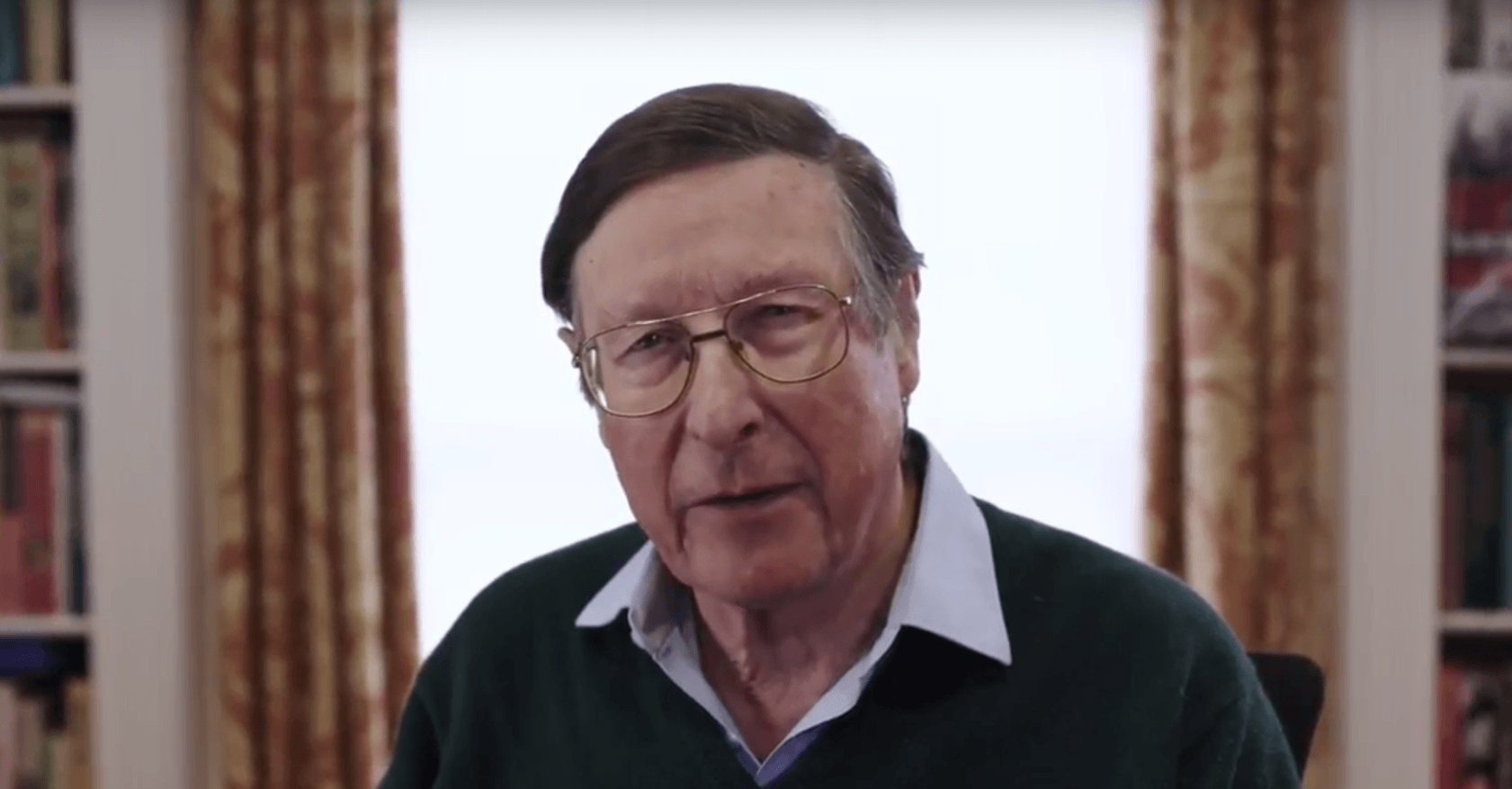
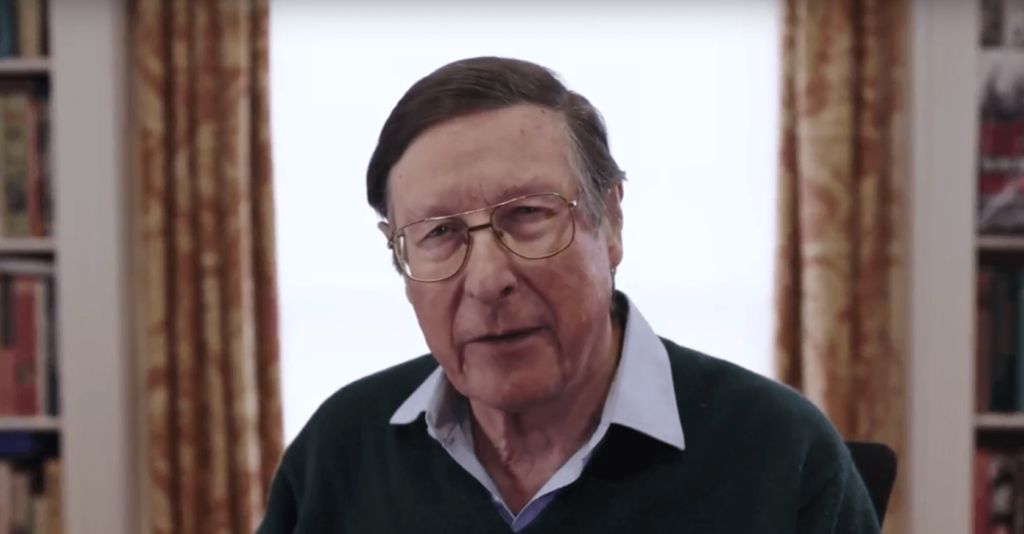
Max’s Lecture on The Media and Modern Warfare
Other Articles
Events
Max will be talking about OPERATION BITING at the following events:Tuesday 21st May 7pm, Intelligence Squared Wednesday 22nd May 6.30pm, Waterstones, Nottingham Tuesday 28th May, 7.30pm, Topping, Bath Friday 31st May, 2.30pm, Hay Festival Wednesday 19th June, 7.30pm, Topping, Edinburgh Thursday 20th June, 7.30pm, Topping, St Andrews Monday… Read More

The Kremlin always falls prey to pride and paranoia
During the 1962 Missile Crisis, on the evening of 23 October a curious episode took place in Moscow. A few hours after President Kennedy announced the discovery of nuclear weapons in Cuba, the Soviet leader or vozhd Nikita Khrushchev determined to show the world that he was unafraid. He… Read More
CHERISHING THE WARRIOR SPIRIT CAN SEEM LIKE A LOSING BATTLE
First published in The Times on Saturday, 13 November 2021.Tomorrow the Queen will forsake her enforced rest to attend the annual Service of Remembrance at the Cenotaph [this was published before her last-minute withdrawal]. It is an occasion that she views with a special sense of duty, because of her… Read More