I have written All Hell Let Loose (published in the US as Inferno) with two ideas in mind:
first, to try to offer some of my own thoughts about great issues which I haven’t discussed in earlier books, and about which I hope that I may have something new to bring to the party- to complete my personal cycle about the Second World War, if you like.
To give a few examples: it seems to me a remarkable paradox, that while the German army fought most of its battles brilliantly well- much better than the allies- its efforts were entirely set at naught by the stunning incompetence with which Germany’s leadership conducted the war, fortunately for us. Meanwhile, whatever the limitations of the British Army, Britain’s war machine was superbly organised, especially in mobilizing its best civilian brains, an achievement exemplified by Bletchley Park, in a fashion the Axis never remotely matched. For years, the turning point of the war was seen as coming at the end of 1942, with German defeat at Stalingrad. Yet it seems a critical historical reality, that as early as December 1941, even before Pearl Harbor, senior functionaries of the Third Reich realised- and even dared to tell Hitler- that failure to defeat Russia before winter meant that military victory in the conflict had become unattainable.
Counter-factuals, might have beens, must be treated with caution, but some can be fascinating. For instance, I suggest that Hitler might have done far more towards persuading the British people to surrender in 1940 by not sending the Luftwaffe to bomb them than by doing so. Before the war, many people feared an annihilatory air attack which would destroy British society. The unfulfilled threat of such an assault might have done much more to intimate the public than the reality, which turned out to be nowhere near as bad as everybody had feared. If the British had simply been left to stew while Hitler seized Malta and drove the British out of the Middle East, Churchill might have found it very hard to retain the premiership. The old Tory appeasers might have gained traction for a peace negotiation with Germany.
My other, I believe more important purpose in this book is to address the question so often asked by people of generations which have been fortunate enough not to be there: ‘Daddy or grandpapa: what was the war like ?’. The answer, of course, is that it was vastly different in kind for people in different circumstances: British tank crews and Chinese comfort women, American paratroopers and Leningrad housewives, German panzer officers and Polish Jews, all of whose predicaments I explore. I have tried to create not so much a history as a global portrait from the bottom up, a story of little people rather than warlords. You will find no photographs in the text of generals or dictators, only of men, women and children of embattled societies.
Men and women from scores of nations struggled to find words to describe what happened to them in the war, transcending anything they had known in their past lives. Many resorted to a cliché: ‘all hell broke loose’. Because the phrase is common in eyewitness descriptions of battles, air raids, massacres and ship sinkings, later generations are tempted to shrug at its banality. Yet I have chosen it as my title because the words capture so vividly what the struggle meant to hundreds of millions of people, plucked from their ordered existences to face ordeals that in many cases lasted for years, and for at least sixty millions ended in death. Each day of the conflict, an average of 27,000 human beings perished around the world by violence, starvation or war-induced disease.
We sometimes read memoirs written by or books written about heroes who make the whole experience sound a romp, a great romantic adventure. For instance, Lt.Robert Hichens of the Royal Navy wrote in his diary in July 1940: ‘I suppose our position is about as dangerous as is possible in view of the threatened invasion, but I couldn’t help being full of joy…Being on the bridge of one of HM ships, being talked to by the captain as an equal, and knowing that she was to be in my sole care for the next few hours. Who would not rather die like that than live as so many poor people have to, in crowded cities at some sweating indoor job ?’. Hichens was killed in action in 1942, but he was a happy warrior.
It is easy to understand why such a dashing young naval officer, or Winston Churchill and Gen.George Patton, the pilots who flew Spitfires and Mustangs, some German panzer officers, had the time of their lives in World War II. For a vastly larger number of people, however, for hundreds of millions around the world who never had the opportunity or inclination to be heroes, the conflict required acceptance of miseries, hardships and sacrifices- matched by a sense of personal impotence- which made the experience wretched. Consider, for instance, a pathetic letter home written by William Crawford, a seventeen year-old boy second class serving aboard the battlecruiser Hood: Dearest Mum…I know it’s wrong to say but I sure am fed up. I feel kind of sick, I can’nae eat and my heart’s in my mouth. We’ve struck bad weather today. Talk about waves as big as houses, they’re crashing over our bows…I wonder if it would do any good Mum if you wrote to the Admiralty and asked them if there was no chance of me getting a shore job at Rosyth. You know, tell them you have got two sons away and that. Be sure to tell them my age. If only I could get off this ship it would not be so bad’. Crawford, however, was still aboard Hood when she was sunk with almost all hands in May 1941. He was just one of sixty million people of all ages, and both sexes for whom the conflict became a personal tragedy.
When I first explored the war in Bomber Command, published in 1979, I would never have guessed that the period would retain its grip on popular imagination around the world into this 21st Century. There seem three reasons. This was the greatest event in human experience. Most people perceive it as that rare thing, a conflict in which good was pitted against indisputable evil. And finally, there seems inexhaustible scope for finding new things to say about it.
Even after countless books, films and TV documentaries, it is amazing how easy it is to surprise people with facts known to historians, but little recognised by a wider public. I mentioned recently to a former head of the British Army that I had written a new study of the war. He responded sceptically: ‘What on earth can you tell us that we don’t know ?’. I asked him to guess what proportion of Germany’s military dead were killed by the Russians. He suggested 60%. I told him that the true figure is over 90%. Hitler’s invasion of Russia was the defining event of World War II: after his 1940 triumphs over Britain and France, it never occurred to him that it might be more difficult to overcome a brutalized society, inured to suffering, than democracies in which moderation and respect for human life were deemed virtues. I next asked my military friend what percentage of total allied military casualties he supposed to have been British or American. He said: maybe 20% each. The real figure was just 2% British, a further 2% American. The Russians suffered 65%, the Chinese 23%, the Yugoslavs 3%. At least 15 million Chinese died in the war, though such statistics are constantly being reviewed and revised, sometimes upwards, sometimes down. For instance, the death toll in the February 1945 bombing of Dresden has been drastically reduced by recent research, from a figure of 150,000 much-cited a generation ago, to 20,000 or even fewer- far less than died in the 1943 Hamburg raids, or March 1945 Tokyo firestorm. Mere numbers are, of course, only part of the story, but they help to emphasise how far many people still have to travel, to achieve a sense of perspective about what happened to mankind between 1939 and 1945. Some modern nations are stunningly ignorant, or wilfully misinformed. A few years ago Japanese writer Kazutoshi Hando, who survived the Tokyo firestorm, lectured to a women’s college. He told me: ‘I asked fifty students to list countries which have not fought Japan in modern times: eleven included America’.
Because the Soviet Union ended up in the allied camp, not only most modern Russians, but also many Westerners, are unaware that between 1939 and June 1941, Stalin was seen around the world as Hitler’s partner in tyranny and aggression, the rapist of Finland, east Poland and eastern Romania. At least 350,000 Poles died as victims of Russian rather than Nazi oppression and imprisonment. In my view, only the single enormity of the Holocaust justifies judging Hitler a more dreadful and murderous tyrant than Stalin. Yet Russia was supposedly joined with Britain and America in a ‘crusade for freedom’.
Confusing, isn’t it ? Many Westerners’ view of the war remains dominated by nationalistic perspectives, cherished myths and legends. Everybody knows about the gallant fighters of the French Resistance, supported by British agents of SOE. Rather fewer people appreciate how fiercely French troops fought against the British in Syria in 1941, as they did also in Madagascar and briefly in North Africa the following year. A French soldier scrawled a graffiti on the wall of a fort in Syria before his unit abandoned it in the face of advancing British troops: ‘Wait, dirty English bastards, until the Germans come. We run away now, but so will you soon’. Few people have heard of the French fighter pilot Pierre Le Gloan, who became an ace by shooting down seven RAF aircraft over Syria in 1941. The writer Roald Dahl, who flew a Hurricane in that campaign, wrote later: ‘I for one have never forgiven the Vichy French for the unnecessary slaughter they caused’.
Between June 1940 and May 1945, more Frenchmen carried arms for Vichy or the German forces than ever fought for the Resistance or allied armies. The great majority of French troops evacuated from Dunkirk to Britain chose to be repatriated to their own country under German occupation, rather than serve with the ‘Free French’ of Gen.De Gaulle, as so too did most of those captured in Syria in 1941. It is easy to forget that in many nations around the world, many people rooted for the Axis, often because they hated the British Empire. Winston Churchill stretched a delicate point by telling the House of Commons on 8 December 1941: ‘We have at least four-fifths of the population of the globe on our side’. It would have been more accurate to say that the allies had four-fifths of the world’s inhabitants under their control, or recoiling from Axis occupation. Propaganda promoted an assumption of common purpose among ‘free’ nations- of which it was necessary to grant honorary membership to Stalin’s tyranny- in defeating the totalitarian powers. Yet in almost every country there were nuances of attitude, and in some places stark divisions.
The mercenaries of Britain’s Indian Army remained generally loyal, and some Indian civilians cherished a deep affection for Britain. I am moved by the story of one named P.G.Mahindasa who was teacher of the English school in Malacca settlement. He wrote after torture and before execution by the occupying Japanese for listening on his radio to the BBC: ‘I have always cherished British sportsmanship, justice and the civil service as the finest things in an imperfect world. I die gladly for freedom. My enemies fail to conquer my soul. I forgive them for what they did to my frail body. To my dear boys, tell them that their teacher died with a smile on his lips’. But we should acknowledge that many of India’s 400 million people saw scant advantage in allied victory, if they remained subject to British rule. For most of the war, the imperial power was obliged to use more troops to maintain its internal control of India in the face of militant nationalists than were deployed against the Japanese.
Jawaharal Nehru, later the first and greatest prime minister of an independent India, wrote from his British prison cell on the day after Pearl Harbor: ‘If I were asked with whom my sympathies lay in this war, I would unhesitatingly say with Russia, China, America and England’. But for the Congress president, there remained an unbreakable barrier to giving the allies his active support. Churchill refused to grant India independence. Thus, Nehru critically qualified the above, ‘there is no question of my giving help to Britain. How can I fight for a thing, freedom, which is denied to me ? British policy in India appears to be to terrify the people, so that in anxiety we may seek British protection’.
Meanwhile in Egypt, Britain exploited to the limits and beyond its treaty rights with a supposedly sovereign state. The country was governed as if it was a colony. Most Egyptians strongly supported the Axis, believing that its victory would free them from imperial subjection. During riots in 1942, crowds thronged Cairo streets shouting enthusiastically ‘Rommel ! Rommel !’. Anwar Sadat, an army officer who later became Egypt’s president, spent much of the war in a British jail for aiding German agents. He wrote later: ‘Our enemy was primarily, if not solely, Great Britain’.
None of this is intended to suggest that I doubt the virtue of the allied cause: rather, I want to show that at the time Churchill and Roosevelt did not have all the best tunes. It does us no harm, in justly congratulating our parents and grandparents on what they did, to be reminded of some blemishes on the allied escrutcheon, foremost among them the 1943 Bengal famine. At least a million people, and perhaps as many as three millions, perished under British rule. Thousands died on the streets of Calcutta while in the city’s clubs white sahibs enjoyed unlimited eggs and bacon.
The famine originated in Japanese seizure of neighbouring Burma, from which much of Bengal’s rice supply traditionally came, and was worsened by crop failure and a cyclone. To the dismay of Wavell, India’s viceroy, Churchill refused to divert shipping to transport food to relieve the needy. The prime minister cited the urgent strategic demands of the war, which were real enough. But Wavell wrote bitterly later, when hundreds of bombers were used to feed Holland: ‘A very different attitude [exists] towards feeding a starving population when the starvation is in Europe’.
More than any other aspect of the war, food or lack of it emphasised the relativity of suffering. Globally, far more people suffered serious hunger, or indeed died of starvation, than in any previous conflict in history including World War I, because an unprecedented range of countries became battlefields, with consequent loss of agricultural production. Even those countries which escaped famine found their diets severely restricted. Britain’s rationing system ensured that no one starved and the poor were better nourished than in peacetime, but few found anything to enjoy about their fare. A landgirl, Joan Ibbertson, wrote: ‘Food was our obsession…We had dried egg once a week for breakfast, but the good lady in charge liked to cook it overnight, so it resembled, and tasted like, sawdust on toast. We had fishpaste on toast, too, some mornings…One Christmas we were allowed to buy a chicken. My bird was so old and tough that we could hardly chew through it’.
Each week a British adult was entitled to 4oz lard or butter; 12oz sugar; 4oz bacon; two eggs; 6oz meat; 2oz tea and unlimited vegetables or home-grown fruit ‘off-ration’, if available. Most households improvised to supplement authorised issues. Derek Lambert, then a small boy, recorded a domestic scene: ‘One morning a jar was put on the breakfast table with supreme nonchalance…My father, an undemonstrative man, spread the nectar on his bread and bit into it. He frowned and said: ‘What was that ?’. ‘Carrot marmalade’, said my mother. With unusual deliberation, he picked up the jar, took it into the garden and poured it onto the compost heap’.
Yet any Russian or Asian peasant or Axis captive would have thought carrot marmalade a luxury. Kenneth Stevens was a prisoner in Singapore’s Changi Jail. He wrote: ‘In this place one’s mind returns continually and dwells longingly on Food…..I think of Duck and Cherry Casserole, Scrambled Eggs, Fish Scallops, Chicken Stanley, Kedgeree, Trifle, Summer Pudding, Fruit Fool, Bread & Butter Pudding- all those lovely things were made just perfectly ‘right’ in my own home’. Stevens died in August 1943 without ever again tasting such delicacies. French girl children shrank by an average of eleven centimetres and boys by seven centimetres between 1935 and 1944. Tuberculosis stimulated by malnutrition increased dramatically in occupied Europe, and by 1943 four-fifths of Belgian children were displaying symptoms of rickets. In most countries city-dwellers suffered more from hunger than country folk, because they had fewer opportunities to supplement their diet by growing their own produce. The poor lacked cash to use the black market which, in all countries, continued to feed those who could pay.
In the matter of diet Canada, Australia and New Zealand escaped lightly, and Americans scarcely suffered at all. Rationing was introduced to Roosevelt’s people only in 1943, and then on a generous scale. Gourmet magazine gushed tastelessly: ‘Imports of European delicacies may dwindle, but America has battalions of good food to rush to appetite’s defence’. Meat was almost the only commodity in short supply, though Americans complained bitterly about that. A housewife named Catherine Renee Young wrote to her husband in May 1943: ‘I’m sick of the same thing…We hardly ever see good steak any more. And steak is the main meat that gives us strength. My Dad just came back from the store and all he could get was blood pudding and how I hate that’. But whatever the shortcomings of wartime quality, American domestic meat consumption fell very little, even when huge quantities were exported to Britain and Russia.
Every nation with power to do so put its own people first, heedless of the consequences for others at their mercy. The Axis behaved most brutally, and with the direst consequences: Nazi policy in the East was explicitly directed towards starving subject races in order to feed Germans. People in occupied regions displayed extraordinary ingenuity in hiding crops from the occupiers, and clung tenaciously to life in defiance of the predictions of Nazi nutritionists, who anticipated 30-40 million fatalities. But in pursuit of the Wehrmacht’s policy of living off the land, German soldiers in the East consumed an estimated seven million tons of Russian grain, 17 million cattle, 20 million pigs, 27 million sheep and goats and over 100 million domestic fowls- and millions of their lawful owners starved to death in consequence.
The Japanese throughout their empire adopted draconian policies to provide food for their own people, which caused mass starvation in south-east Asia, with one million victims in Vietnam alone. China also suffered appallingly, its peasants despoiled by both the Japanese and Nationalist armies. In Henan province in 1942, when unseasonable frost and hail were followed by a plague of locusts, millions left their land and many perished. Peasants ate elm bark and dried leaves.
Though the allies were not responsible for anything like the human toll inflicted by the Axis, their policies displayed a harsh nationalistic selfishness. The United States insisted that both its people at home and armed forces abroad should receive fantastically generous allocations of food, even when shipping space was at a premium. Meanwhile in Leningrad, in the course of almost three years under siege 800,000 people perished, and some survived only by eating each other. In the first ten days of January 1942, the NKVD reported forty-two cases of cannibalism: corpses were found with thighs and breasts hacked off. Worse, the weak became vulnerable to murder not for their meaningless property, but for their flesh. On 4 February a man visiting a militia office reported seeing twelve women arrested for cannibalism, which they did not deny. He wrote: ‘One woman, utterly worn out and desperate, said that when her husband fainted through exhaustion and lack of food, she hacked off part of his leg to feed herself and her children’. The prisoners sobbed, knowing that they faced execution.
That February, by far the worst month of the siege, twenty thousand people were reported to be dying every day; amid a weakened population, dysentery became a killer. There were queues at street taps for water, and fires burned unchecked for lack of means to extinguish them. Supplies of coffins ran out. Many of those with energy to read turned to War And Peace, the only book which seemed capable of explaining their agony. In the west, British and American infantrymen were appalled by their experiences in the eleven months of the 1944-45 North-West Europe campaign. But Russians and Germans fought each other continuously for almost four years in far worse conditions, and with vastly heavier casualties: the Eastern Front overwhelmingly dominated the struggle against Hitler.
Between 1941 and 1944, British and American sailors and airmen engaged the Axis at sea and in the sky, but relatively small numbers of western allied ground troops took part in the little campaigns in North Africa, Italy, Asia and the Pacific. In July 1943, when almost four million Axis and Soviet troops were locked in bloody combat at Kursk and Orel where half a million Russians died, just eight Anglo-American divisions were fighting in Sicily, scene of the principal Western effort against the Nazis, where they suffered just 6000 dead. Nor was Russia alone in the scale of sufferings far worse than anything Westerners experienced: I have mentioned above China’s ordeal amid Japanese invasion and occupation, which persisted from 1937 to 1945. Yugoslavia, where civil war was overlaid on Axis occupation, lost more than a million dead.
Many people, soldiers and civilians alike, witnessed spectacles comparable with Renaissance painters’ conception of the inferno to which the damned were consigned: human beings torn to fragments of flesh and bone; cities blasted into rubble; ordered communities sundered into dispersed human particles. Almost everything which civilized peoples take for granted in time of peace was swept aside, above all the expectation of being protected from violence.
I have tried to illuminate the conflict’s significance for a host of ordinary people, both active and passive participants, though the distinction is often blurred. Was a Hamburg woman who ardently supported Hitler, but perished in the July 1943 firestorm generated by allied bombing, an accomplice to Nazi war guilt or the innocent victim of an atrocity ? So widespread is a modern Western perception that the war was fought about Jews, that it deserves to be emphasised this was not the case. Though Hitler and his followers chose to blame the Jews for the troubles of Europe and grievances of the Third Reich, Germany’s struggle with the allies was about power and hemispheric dominance.
The plight of the Jewish people under Nazi occupation loomed relatively small in the wartime perceptions of Churchill and Roosevelt, and less surprisingly in that of Stalin. About one-seventh of all fatal victims of Nazism, and almost a tenth of all wartime dead, ultimately proved to have been Jews. But at the time their persecution was viewed by the allies merely as one fragment of the collateral damage of Hitler, as indeed Russians still see the Holocaust today. It seems important to assess the Holocaust not in isolation, as it usually considered, but against the background of Hitler’s governance of his empire, which included- for instance- starving to death more than three million Russian prisoners in German hands.
One of the most moving and enlightened advocates of pursuing such context was a young Jewish girl named Ruth Maier. As a twenty-two year-old refugee in Oslo, barely a month before her own deportation and murder in Auschwitz, she wrote in her diary: ‘If you shut yourself away and look at this persecution and torture of Jews only from the viewpoint of a Jew, then you’ll develop some sort of complex which is bound to lead to a slow but certain psychological collapse. The only solution is to see the Jewish question from a broader perspective…within the framework of the oppressed Czechs and Norwegians, the oppressed workers…We’ll only be rich when we understand that it’s not just we who are a race of martyrs. That beside us there are countless others suffering, who will suffer like us until the end of time…if we don’t…if we don’t fight for a better…’. She broke off to express exasperation about the persistence of her own instinct to see the Jewish tragedy as unique, but her mental confusion does not diminish the nobility and unselfishness of this very young woman’s words from the threshold of the grave.
One of the most important truths about the war, as indeed about all human affairs, is that people can interpret what happens to them only in the context of their own circumstances. The fact that, objectively and statistically, the sufferings of some individuals were less terrible than those of others elsewhere in the world was meaningless to those concerned. It would have seemed monstrous to a British or American soldier facing a mortar barrage, with his comrades dying around him, to be told that Russian casualties were many times greater. It would have been insulting to invite a hungry Frenchman, or even an English housewife weary of the monotony of rations, simply to thank their stars they were not starving to death in millions like the Russians or West Bengalis who were selling their daughters. The fact that the plight of other people was worse than one’s own did little to promote personal stoicism.
Some aspects of wartime experience were almost universal: fear and grief; the conscription of young men and women obliged to endure new existences utterly remote from those of their choice, often under arms and at worst as slaves. A boom in prostitution was a tragic global phenomenon, which deserves a book of its own. The conflict provoked many mass migrations. Some of these were orderly: half the population of Britain moved home in the course of the war, and many Americans took new jobs in unfamiliar places. Elsewhere, however, millions were wrenched from their communities in dreadful circumstances, and faced ordeals which often killed them. An anonymous Berlin woman wrote in April 1945 in one of the great diaries of the war: ‘These are strange times, history experienced first hand, the stuff of tales yet untold and songs unsung. But seen close up, history is much more troublesome- nothing but burdens and fears. Tomorrow I’ll go and look for nettles and get some coal’.
News of the violent and premature deaths of distant loved ones was a pervasive feature of wartime experience. Often, little was known of their fate, as J.R.Ackerley noted in a 1942 poem published in The Spectator:
We never knew what became of him, that was so curious;
He embarked, it was in December, and never returned;
No chance to say Good-bye, and Christmas confronting us;
A few letters arrived, long after, and came to an end.
The weeks dragged into months, and then it was December again.
We troubled the officials, of course, and they cabled about;
They were patient but busy, importunities without number;
Some told us one thing, some another; they never found out.
There’s a lot go like that, without explanation;
And death is death, after all; small comfort to know how and when;
But I keep thinking now that we’ve dropped the investigation;
It was more like the death of an insect than of a man.
The nature of battlefield experience varied from nation to nation, service to service. Within armies, riflemen experienced far higher levels of risk and hardship than millions of support troops. The US armed forces suffered an overall death rate of just five per thousand men enlisted; the vast majority of those who served faced perils no greater than those of ordinary civilian life. While 17,000 American combat casualties lost limbs, during the war years 100,000 workers at home became amputees because of industrial accidents.
Contemporary diaries and letters record what people did or what was done to them, but often tell us little about what they thought; the latter is more interesting, but more elusive. The obvious explanation is that most warriors are very young and immature: they experience extremes of excitement, terror or hardship, but only a small minority have the emotional energy for reflection, because they are absorbed in their immediate physical surroundings, needs and desires.
Nobody except national leaders and commanders knew much about anything beyond their immediate line of sight. Civilians existed in a fog of propaganda and uncertainty, scarcely less dense in Britain and the US than in Germany or Russia. Front-line combatants assessed the success or failure of their side chiefly through counting casualties and noticing whether they were moving forwards or backwards. These were, however, sometimes inadequate indicators; for instance, Pfc Eric Diller’s battalion was cut off from the main American army for seventeen days during the Leyte campaign in the Philippines, but he realised the seriousness of his unit’s predicament only when this was explained to him by his company commander after the war was over.
Even those with privileged access to secrets were confined to their own fragments of knowledge in a vast jigsaw puzzle. My old friend Roy Jenkins, the later statesman, decrypted German signals at Bletchley Park. He and his colleagues knew the importance and urgency of the work they were doing but, contrary to the impression given in sensational films about Bletchley, they were told nothing about the significance or impact of their contributions. Such constraints were greater, unsurprisingly, on the other side of the hill: in January 1942 Hitler decided that too many Germans knew too much. He decreed that even officials of the Abwehr should receive only such information as was necessary for their own work. They were forbidden even to monitor enemy broadcasts, quite a handicap for an intelligence service.
I have tried to make this the story of ‘everyman’s war’, a bottom-up rather than top-down account. I have focused on the experiences of such people as a British landgirl, an elderly Hamburg housewife, Russian soldiers, American sailors and British aircrew, rather than on the great men, about whom I have written extensively elsewhere. I have focused upon events about which there seem new things to be said at the expense of battles like Normandy and Arnhem, exhaustively explored by hundreds of writers, and indeed in my own earlier books.
Under fire, the hell of bombardment, most people focused upon immediacies and loyalties towards each other. Their hopes and fears became elemental, as described by British Lt.Norman Craig in the desert: ‘Life was so free of all its complexities. What a clarity and a simplicity it really had! To stay alive, to lead once more a normal existence, to know again warmth, comfort and safety- what else could one conceivably demand ? I would never chide circumstance again, never question fate, never feel bored, unhappy or dissatisfied. To be allowed to continue to live- nothing else mattered’.
The chances of achieving this simple purpose varied immensely from country to country and service to service: about 8% of all Germans died, compared with 14% of Soviet citizens, 2% of Chinese, 3.44% of Dutch people, almost 7% of Yugoslavs, 4% of Greeks, 1.35% of French, 3.78% of Japanese, 0.94% of British and 0.32% of Americans. Within the armed forces, 31% of Germans conscripted into the Wehrmacht died, 35% of the Waffen SS. Some 24% of Japanese soldiers were killed, and almost 20% of naval personnel. One Russian soldier in four died, against one in twenty British Commonwealth combatants and one in thirty-four American servicemen.
When the Western allies celebrated victory in Europe in May 1945, tens of millions of people under Stalin’s new tyranny continued to suffer appallingly. For instance, for two years after VE-Day, the NKVD waged a bloody counter-insurgency campaign in Poland and Ukraine, to impose Stalin’s will upon peoples consumed with bitterness about exchanging Nazi tyranny for that of the Soviets. Exiled Poles in the West were dismayed to be denied a place in London’s victory parade, because the new British Labour government declined to upset the Russians. Gen.Wladsylaw Anders wrote: ‘I felt as if I were peeping at a ballroom from behind the curtain of an entrance door through which I might not pass’. Shortly before Labour took office in July, Anders encountered the US ambassador and British foreign secretary Anthony Eden at a banquet: ‘They greet me politely but without enthusiasm. Since our only crime is that we exist and thereby embarrass Allied policy, I do not consider myself obliged to hide or feel ashamed’.
His bitterness was justified: he and almost 150,000 of his compatriots had fought gallantly with the allied forces, suffering heavy casualties in Italy and North-West Europe. A Polish pilot named Lvov wrote: ‘We, the Poles in uniform integrated into the British armed forces, became an ugly sore on the English conscience’. In 1945 he and his comrades suddenly found themselves pariahs, for the crime of rejecting a Stalinist puppet regime in their own country, for whose freedom Britain and France had gone to war in September 1939. The Poles ended the war as they began it, human sacrifices to realities of power; Anders, Lvov and many of their comrades chose exile in the West rather than return home to Soviet subjection and probable execution. The Americans and British had delivered half Europe from one totalitarian tyranny, but lacked the political will and military means to save ninety million people in the East from falling victim to a new, Soviet bondage that lasted almost half a century. The price of having joined with Stalin to destroy Hitler was high indeed.
Some modern historians who are citizens of nations that were once European possessions regard their peoples as victims of wartime exploitation. They suggest that Britain, especially, engaged them in a struggle in which they had no stake, for a cause which was not properly theirs. Such arguments represent points of view rather than evidential conclusions, but it seems important for Westerners to recognise such sentiments, as a counterpoint to our own instinctive assumption that our grandparents fought ‘the Good War’.
Within Western culture, of course, the conflict continues to exercise a fascination for generations unborn when it took place. One obvious explanation is that within the vast compass of the struggle, some individuals scaled summits of courage and nobility, while others plumbed depths of evil, in a fashion that compels the awe of posterity. Among citizens of modern democracies to whom serious hardship and collective peril are unknown, the tribulations which hundreds of millions endured between 1939 and 1945 are almost beyond comprehension. Almost all those who participated, nations and individuals alike, made moral compromises. It is impossible to dignify the struggle as an unalloyed contest between good and evil, nor rationally to celebrate an experience and even an outcome, which imposed such misery upon so many. Allied victory did not bring universal peace, prosperity, justice or freedom; it brought merely a portion of those things to some fraction of those who ha d taken part. All that seems certain is that allied victory saved the world from a much, much worse fate that would have followed the triumph of Germany and Japan. With this knowledge, seekers after virtue and truth must be content.
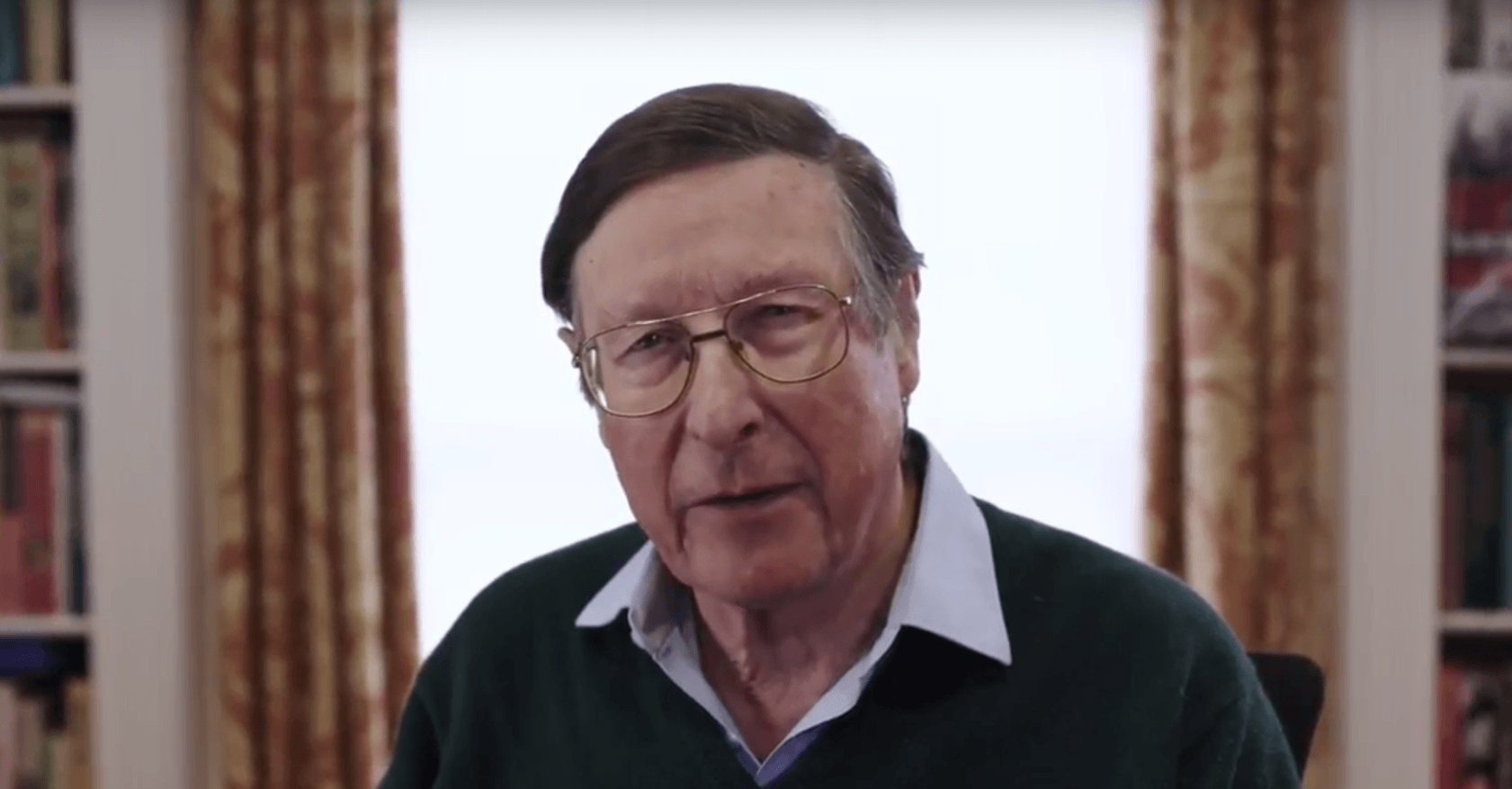
Max’s Lecture on All Hell Let Loose

Other Articles
Waterstones Paperbacks of the Year
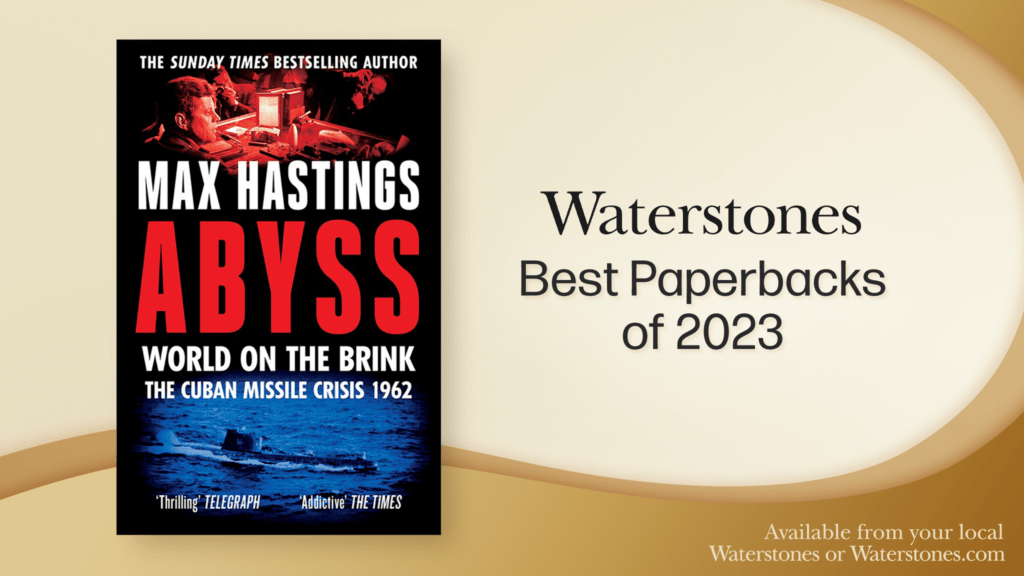
We are thrilled Abyss has been selected as a Waterstones Best Paperback of the Year. You can read more about the book and get your copy here. Read More
Events
Max will be talking about OPERATION BITING at the following events:Tuesday 21st May 7pm, Intelligence Squared Wednesday 22nd May 6.30pm, Waterstones, Nottingham Tuesday 28th May, 7.30pm, Topping, Bath Friday 31st May, 2.30pm, Hay Festival Wednesday 19th June, 7.30pm, Topping, Edinburgh Thursday 20th June, 7.30pm, Topping, St Andrews Monday… Read More
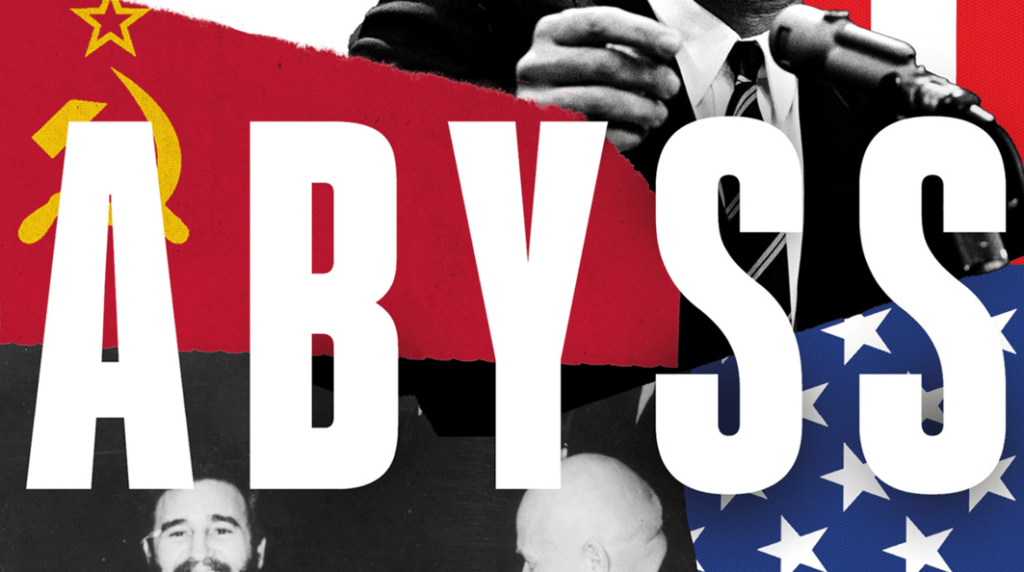
Rave Reviews for Abyss
‘Grabs from the get-go … the moments in which the world teetered on the brink of total annihilation … come alive as they would if this were the very best fiction … Hastings is a writer in the permanent prime of his time … ABYSS is up there with… Read More